
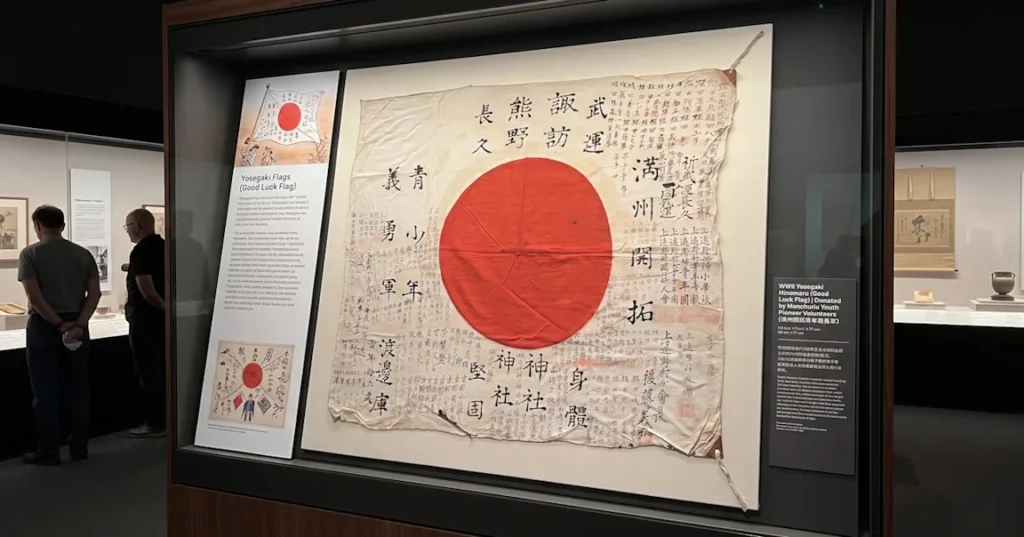
Understanding the Meaning of WWII Japanese Good Luck Flags
Many cultures have symbols of luck, courage, or hope during times of warfare. During World War One, Americans carried deployment banners or signature quilts. German soldiers in World War Two carried signed pillows, pennants, remembrance clothes, or farewell flags.
Possibly the most cherished and spiritual form of this practice comes from Japan. The WWII Japanese Good Luck Flag, or yosegaki hinomaru, is a symbol of love and luck carried by soldiers during WWII. They are a spiritual reminder of the friends, family, and loved ones who sign them with messages.
Let’s look at the history, significance, and meaning of these unique artifacts, and why they remain highly sought-after examples of authentic WWII Japanese militaria.
The meaning of WWII Japanese Good Luck Flags lies in their role as personal talismans, embodying the hopes and prayers of those who wrote on their japanese personal good luck flag.
What Are Japanese “Good Luck” Flags?
Japanese good luck flags, called hinomaru yosegaki in traditional Japanese, were national flags presented to a new soldier in the Japanese armed forces. They were generally presented at his induction or before deployment.
Each soldier’s loved ones—including family, friends, neighbors, and co-workers—would sign the flag with their names as well as any messages they wanted to offer. Many of these messages included wishing the soldier good luck, leading to the common name “Good Luck Flags.” In some rarer cases, the flags featured cartoons, drawings, or complex artwork of tigers or other animals.
Still to this day, Japanese hinomaru are used for special occasions like charity or sporting events. However, it’s the historical significance of a wartime Japanese Army Prayer Flag that makes these pieces valuable keepsakes, cherished artifacts, and beloved pieces of military memorabilia.
The Meaning of “Yosegaki Hinomaru”
The word hinomaru translates to “circular sun,” which alludes to the Japanese national flag. When signatures were added to these flags, they were generally written radiating outward from the central red circle, as if imitating the sun’s rays.
This striking appearance is referred to as yosegaki, which means a “collection of writing.” Together, the term yosegaki hinomaru translates to a collection of writing around the circular sun.
The History of Good Luck WW2 Japanese Deployment Flags
While the exact origin of this tradition is unknown, the iconic WWII variant is not the first instance of a signed good luck flag.
Some historians believe that they originated during the First Sino-Japanese War between 1894 and 1895. However, historical examples before World War One are exceptionally rare. Even though WWII-era flags are the most common variants found today, they are still tough to find in good condition with proper verification.
The Meaning and Spirituality of the Hinomaru Flag
For soldiers deployed vast distances away from home, these signed WWII Japanese personal good flags offered prayers, hope, and remembrances every time the flag unfolded from their belt, pouch, or bag.
In fact, it was believed that these flags offered a spiritual power to help the owner through difficult times. The combined power of signatures and slogans of luck and hope didn’t just help the soldier by reminding them of their loved ones and their duty, but acted as a protective presence to see him through battle.
However, the idea of self-sacrifice was also central to Japanese military culture in World War 2. Drawing heavily from ancient samurai traditions, the Japanese believed great honor would befall the family whose loved ones died serving their country. The flags served as a poignant reminder of the soldier’s ultimate duty, carrying the somber understanding that they were not expected to return home.
Modern Japanese Good Luck Flags
While these Imperial Japanese Army flags are most often associated with WWII, yosegaki hinomaru are still being utilized now in 2026. They remain a vibrant symbol of good luck and are frequently displayed at international sporting events like the Olympics as a traditional way for citizens to support their national team.
Interestingly, the tradition of hinomaru yosegaki has spread to other countries that use their own national flags for similar presentation purposes, including the United States, Brazil, Canada, Iran, and South Korea.
Collecting and Determining Yosegaki Hinomaru Value
For collectors of militaria, vexillology, and Asian history, these items are highly prized. They are cherished for their deeply personal nature, direct ties to World War 2, and overall historical significance.
If you are looking for an authentic WWII Japanese flags for sale, it is important to know what to look for to ensure your piece is real.
First, the fabric and materials should be period-correct cotton, silk, or rayon, and should show genuine signs of age and wear. After all, these flags are nearly 100 years old. Additionally, genuine wartime signatures should feature period-correct calligraphy that typically flows away from the sun.
So, what is the average Yosegaki Hinomaru value on the market today? Authentic, standard versions typically fall between $200 and $500. However, rare versions with painted artwork, distinct unit stamps, or verifiable provenance can cost upwards of $3,000.
Having a recorded backstory or knowing the history of a specific soldier drastically increases the value. For instance, advanced military collections highly prize flags tied directly to prominent wartime figures, judicial bureaucrats, or high-ranking commanders of the Imperial Japanese Army. Learn more about these traditional WWII Japanese good luck flags HERE
Where to Buy an Authentic WWII Japanese Good Luck Flag?
When shopping for an authentic Japanese Good Luck Flag, make sure to only browse legitimate, specialized dealers. A modern replica is only worth $10 to $40, while authentic vintage versions hold significant historical and financial value.
Be sure to source your artifacts from trusted militaria dealers who inspect the fabric, ink transfer, and historical context of the inscriptions to guarantee you are adding a genuine piece of World War II history to your display.