
$799.99
This investment-grade WWII Japanese Yosegaki Hinomaru flag offers an unparalleled window into the geopolitical landscape of the Pacific War.
1 in stock
Description
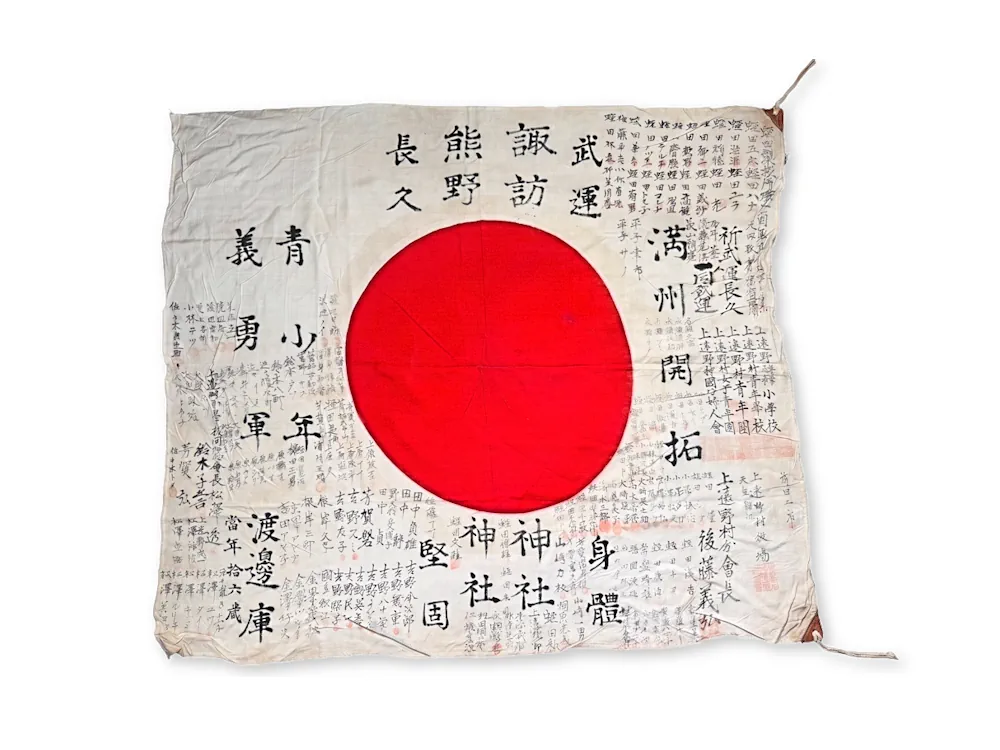
This investment-grade WWII Japanese Yosegaki Hinomaru flag offers an unparalleled window into the geopolitical landscape of the Pacific War. Unlike standard military send-off pieces, this specific artifact is directly tied to the Manshu Kaitaku Seishonen Giyugun—the Manchuria Youth Pioneer Volunteers. This paramilitary program sent approximately 86,000 teenage agrarian boys to the hostile Soviet border, cementing their legacy in wartime history as the tragic “soldiers with hoes.”
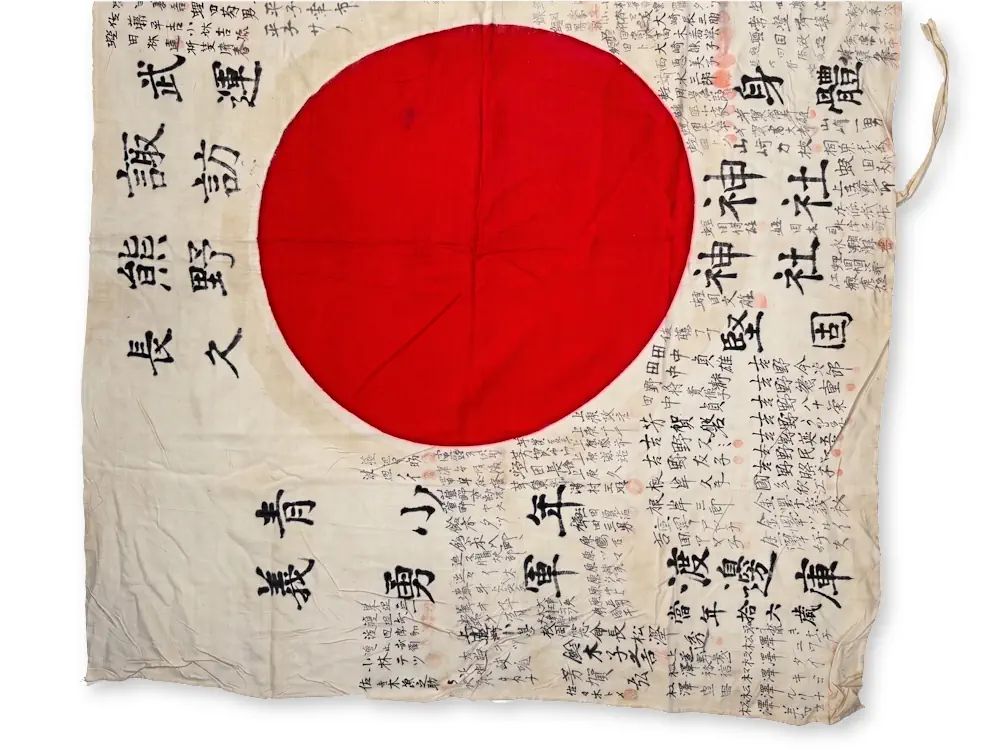
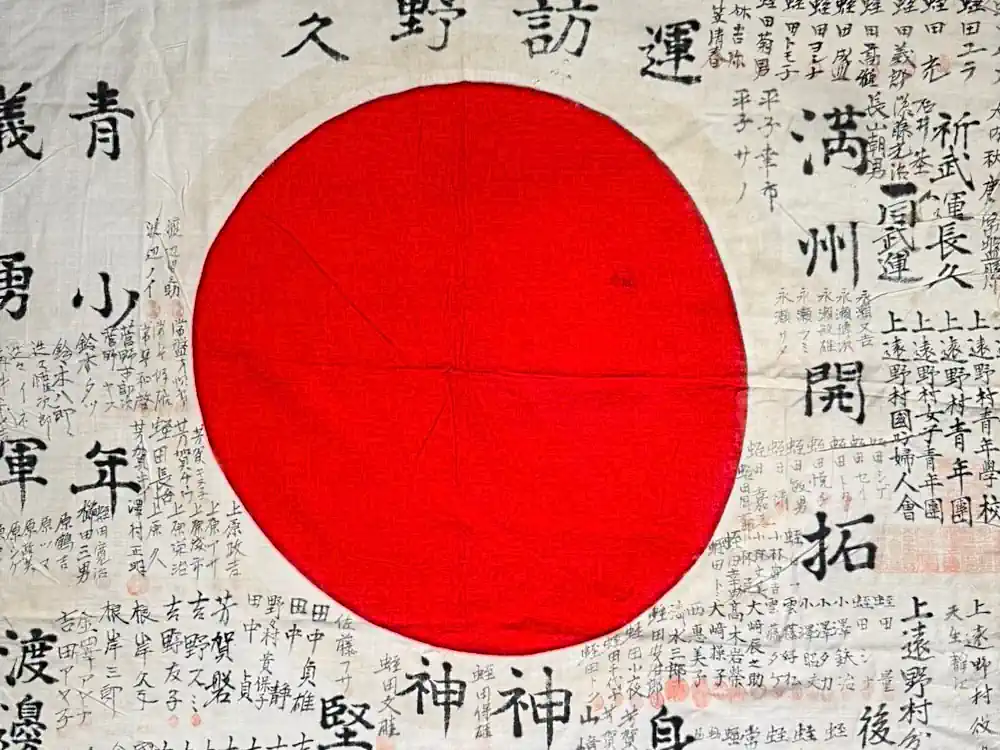
The textile showcases extraordinary historical documentation. Prominently inscribed along the top is the traditional wartime slogan Buun Chokyu (Eternal Military Fortune). The white cotton surface is heavily detailed with an authentic Shinto shrine stamp from both the Suwa and Kumano Shrines of Kami-Toono Village. These official red shuin ink stamps indicate that this Japanese Good Luck Flag was blessed during a formal community send-off ceremony.
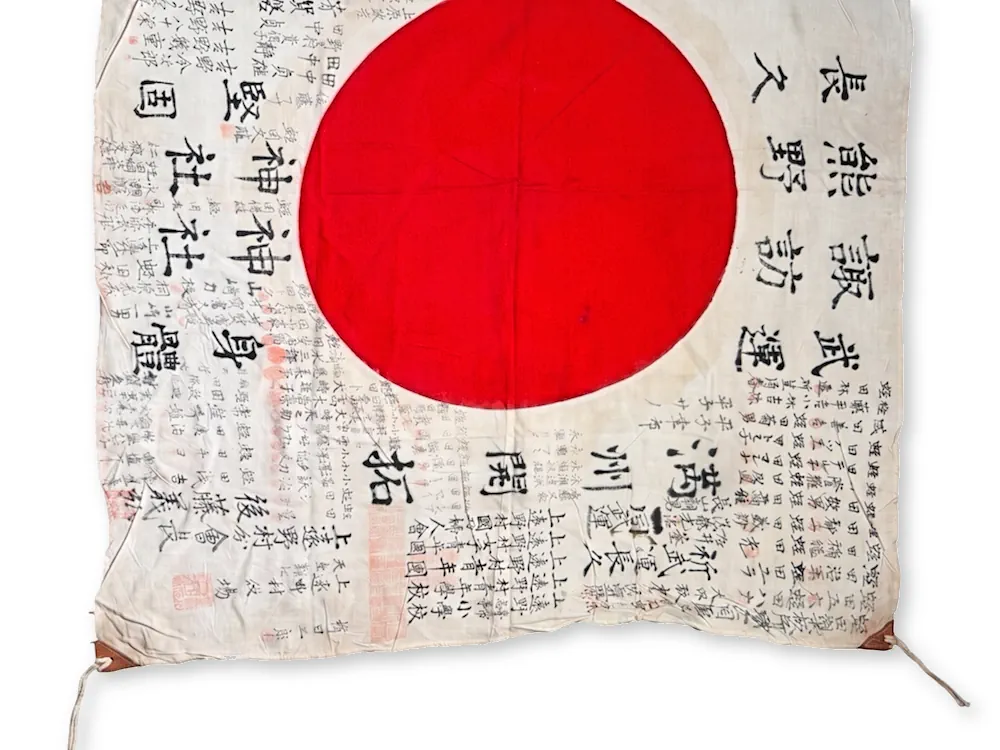
Surrounding the central solar disc are numerous hand-written signatures from local youth schools and women’s associations, all rallying to support a 16-year-old volunteer named Watanabe. For institutional context on the migration patterns and fates of these youth units during the 1945 Soviet invasion, collectors can reference detailed information HERE
Measuring approximately 65 cm x 77 cm, this artifact remains in remarkable, period-original condition. The corners retain their genuine leather reinforcement tabs and mounting ties. The light staining, minor creasing, and natural patina are entirely consistent with late 1930s or early 1940s textiles, validating its provenance. For discerning preservationists of high-value WWII military collectibles, this artifact represents supreme cultural scarcity and profound narrative depth.
Specifications
-
Era: World War II (Circa 1938–1945)
-
Material: Period-Authentic Cotton
-
Dimensions: Approximately 65 cm × 77 cm (25.5″ × 30.3″)
-
Origin: Kami-Toono Village, Japan (Deployed to Manchuria)


Reviews
There are no reviews yet.